

12 May Budgeting for a Japan Media Co-Production: Cost Breakdown, Incentives, and ROI Planning
Introduction: Why Japan Co-Production Costs Are Misunderstood

Japan has a reputation problem when it comes to production budgets. Ask any international producer about shooting in Tokyo or Kyoto and the first word you hear is “expensive.” That perception is outdated — and it ignores the single most powerful variable in the equation.
The Japanese government now offers a 50% cash rebate on qualifying production costs through the JLOX+ location incentive program, administered by the Ministry of Economy, Trade and Industry (METI) and managed by the Visual Industry Promotion Organisation (VIPO). That rebate, combined with a stackable 20% co-production subsidy from the Agency for Cultural Affairs and emerging IP360 grants for new intellectual property, fundamentally changes the cost equation. A ¥10M shoot in Japan can net out closer to ¥3.5M after incentives — a figure that competes with or undercuts many Southeast Asian production hubs that lack Japan’s technical infrastructure, world-class studio facilities, and deep creative talent pool.
The challenge is not that Japan is too expensive. The challenge is that most international producers have never modeled the real numbers. This article provides that model: a transparent cost breakdown by production type, a walkthrough of every available government incentive, the hidden costs that catch foreign producers off guard, and a framework for projecting return on investment across multi-territory distribution.
Cost Breakdown by Production Type
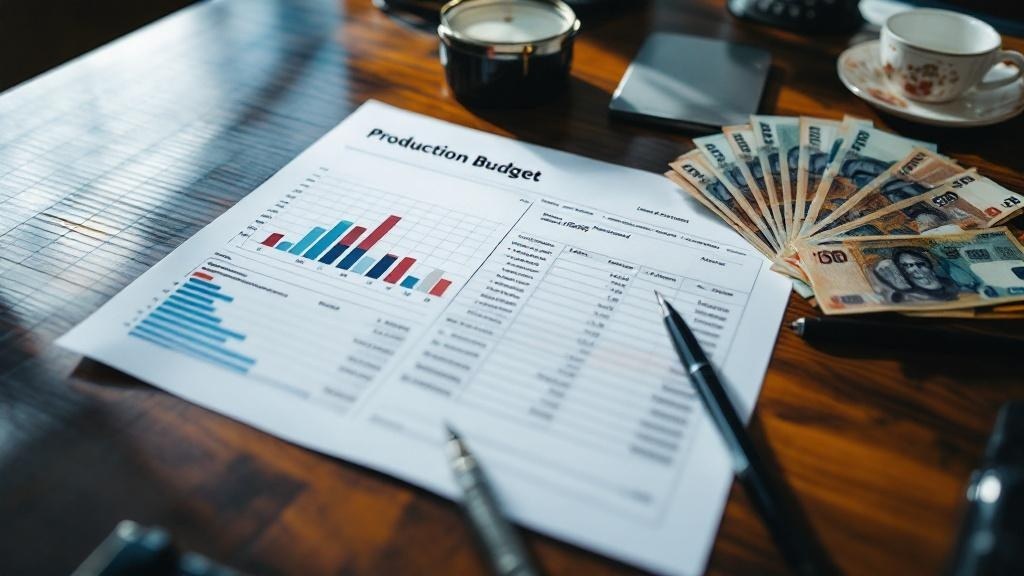
The japan media co-production cost varies enormously depending on format, scale, and the ratio of Japanese to international elements. The ranges below reflect current market rates for productions with meaningful international co-production components — not purely domestic Japanese budgets.
| Production Type | Budget Range (USD) | Key Cost Drivers |
|---|---|---|
| **Commercial / Advertising** | $2K–$70K+ | Talent fees, location count, multi-language deliverables |
| **Film & Television** | $14K–$210K+ | Cast scale, shooting days, VFX complexity |
| **Animation** | $7K–$140K+ | Episode count, studio tier, international voice cast |
| **Music Video** | $3.5K–$105K+ | Artist profile, international crew elements, location ambition |
| **Documentary** | $14K–$210K+ | Duration, number of locations, archival licensing |
Japan’s domestic video production services market reached ¥458 billion in 2025 and is projected to hit ¥497 billion in 2026, reflecting sustained demand growth across advertising, streaming, and corporate content. For international co-producers, this means a mature vendor ecosystem — but also one where premium crew and studio time must be booked well in advance.
Where the Money Goes
Across all production types, the largest line items are typically talent compensation (30–40% of budget), crew and equipment (25–30%), location and permits (10–15%), and post-production including localization (15–20%). Animation budgets skew differently, with key animator and background artist costs dominating while location expenses are minimal.
Japan’s Government Incentive Stack
Japan’s incentive framework is the most compelling reason to budget optimistically. Three distinct programs can be combined — and understanding how to stack them is where sophisticated budget planning pays off.
JLOX+ Location Incentive: 50% Rebate
The flagship program offers a cash rebate equal to 50% of qualifying production expenses incurred within Japan. Eligible costs include crew wages, equipment rental, studio fees, location permits, and accommodation.
Eligibility thresholds:
| Pathway | Requirement | Max Subsidy |
|---|---|---|
| **Standard** | ≥$3.3M direct costs in Japan | $6.7M |
| **Large budget** | ≥$6.7M total budget + ≥$1.3M in Japan | $6.7M |
| **Wide distribution** | Release in 10+ countries + ≥$1.3M in Japan | $6.7M |
The program was extended to a two-year framework in late 2025, eliminating the previous seasonal constraints that forced productions to wrap principal photography by November. Four application windows now operate quarterly, giving producers predictable decision points throughout the year.
How to apply for the JLOX+ rebate: Submit during one of four annual windows (roughly March, May, July, and September) through VIPO. Applications require a detailed budget, proof of international distribution plans, and commitment to promoting the Japanese regions where filming occurs. Approval decisions arrive within 2–6 weeks of window closure. The rebate is paid post-production after a financial audit — meaning producers must front costs and plan cash flow accordingly.
Agency for Cultural Affairs Co-Production Subsidy: 20% of Costs
Feature films (live-action or animated) that obtain a UNIJAPAN Certificate can apply for a separate subsidy covering 20% of qualifying expenditures, up to ¥50M (~$435K). Unlike JLOX+, this subsidy covers expenses incurred anywhere — not just in Japan — making it particularly valuable for productions with significant post-production work abroad.
Eligibility requires minimum 20% Japanese financing, at least 5% international financing (above ¥10M), and a minimum of three creative contribution points from Japanese nationals in key roles such as director, screenwriter, or principal cast.
IP360 Grants for New IP Creation: Up to ¥10M
The newest addition to the stack, IP360 targets creation of original intellectual property with international distribution potential. Grants cover up to 50% of eligible costs (max ¥10M / ~$70K), including pre-production, production, localization, and promotional activities. Projects based on existing IP (sequels, remakes) are excluded. This program is particularly relevant for anime co-productions and original documentary series where new IP is the core asset.
Stacking Incentives for Maximum Offset
The three programs are administered by different agencies and can be combined on a single project. A qualifying feature film could theoretically access the 50% JLOX+ rebate on Japanese production costs, the 20% Cultural Affairs subsidy on total costs, and an IP360 grant for original IP development — potentially offsetting 40–60% of total project costs depending on budget structure and eligibility across all three programs.
Hidden Costs Foreign Producers Overlook
Even with incentives factored in, several cost categories routinely surprise international producers budgeting their first Japan co-production.
10% Consumption Tax on Domestic Services
Japan levies a 10% consumption tax on virtually all domestic production services — equipment rental, studio fees, catering, transportation. This is on top of quoted rates and must be budgeted as a line item, not absorbed into contingency.
20.42% Withholding Tax on Foreign Talent
Any compensation paid to nonresident performers for services in Japan triggers a 20.42% withholding tax obligation. This applies to foreign actors, directors, and creative leads. While bilateral tax treaties may reduce the effective rate, the withholding must be collected and remitted by the Japanese payer regardless. Budget for gross-up provisions if talent contracts guarantee net compensation.
Visa Processing and Immigration Coordination
Foreign cast and crew require entertainment visas processed through the Certificate of Eligibility system, typically taking 1–3 months. Budget $2,000–$5,000 per person for immigration coordination, documentation, and processing when factoring in legal support and administrative time.
Location Permit Fees and Community Liaison
Filming permits in Japan require Japanese-language applications and, in most cases, a local location coordinator to manage community liaison, pedestrian safety, and restoration obligations. Permit fees themselves are modest, but coordinator costs and community notification requirements add $5,000–$20,000 per major location.
Extended Decision Timelines
Japanese approval processes — from government incentive decisions to location permits to partner contract negotiations — typically run 12–16 weeks, compared to 4–6 weeks in markets like the UK, Australia, or Canada. This extended timeline adds carrying costs: longer option periods on talent, extended office leases, and delayed production starts. Budget 2–4 months of overhead that would not exist in faster-moving jurisdictions.
Modeling ROI for a Japan Co-Production

Cost is only half the equation. Japan co-productions unlock revenue streams that purely domestic productions in other markets cannot access.
Multi-Territory Distribution as the Key Revenue Multiplier
Japan’s bilateral co-production treaties — including agreements with China, Italy, and other partners — grant co-produced works national film status in both countries. This dual recognition opens access to distribution quotas, broadcast mandates, and cultural funding in each territory, effectively doubling the addressable market for a single production.
Bilateral Treaty Benefits
Official co-production status under a bilateral treaty means the finished work qualifies as a “national film” in both Japan and the partner country. In practice, this enables access to screen quotas, broadcaster acquisition preferences, and cultural fund eligibility that foreign-produced content cannot access. The UNIJAPAN portal tracks active treaty frameworks and supported titles.
Streaming Platform Pre-Sales
Japan’s streaming content market reached approximately ¥593 billion in 2024 and is growing at over 16% annually. International streaming platforms — Netflix, Amazon Prime Video, Crunchyroll — are actively commissioning Japan-based content with global distribution mandates. Pre-sale agreements with these platforms can cover 30–60% of production budgets before a frame is shot.
Merchandise, IP Licensing, and Ancillary Revenue
For anime co-productions especially, ancillary revenue often exceeds primary distribution income. Japan’s anime industry generated overseas sales of ¥2.1 trillion in 2024, with the government targeting ¥6 trillion by 2033. Merchandise licensing, character goods, live events, and game adaptations create revenue tails that extend years beyond initial release — a factor that fundamentally reshapes ROI models for IP-rich co-productions.
Sample Budget Scenarios
Scenario A: Mid-Budget Commercial Co-Production
A ¥5M (~$35K) cross-border advertising campaign shot in Tokyo with international talent. After applying the JLOX+ 50% rebate on ¥3M of qualifying Japanese costs, the net Japanese spend drops to ¥3.5M. The production delivers localized assets for three markets.
Scenario B: Anime Series Co-Production with Streaming Pre-Sale
A 12-episode anime series budgeted at ¥15M per episode (¥180M total). A streaming platform pre-sale covers ¥90M (50%). JLOX+ rebates an additional ¥45M on qualifying Japanese production costs. The Cultural Affairs subsidy adds ¥36M (20% of total). Net producer exposure: approximately ¥9M on a ¥180M production — with merchandise and international licensing revenue still ahead.
Scenario C: Documentary Using Bilateral Treaty + Cultural Agency Subsidy
A Japan-Italy documentary co-production budgeted at ¥20M. The bilateral treaty grants national film status in both countries, enabling access to Italian tax credits alongside Japanese incentives. The Cultural Affairs subsidy covers ¥4M (20%, subject to ¥50M cap). JLOX+ rebates ¥5M on Japanese location costs. Italian incentives contribute an additional €150K. Combined offset: approximately 55% of total budget.
Budget Planning Mistakes to Avoid
Underestimating Post-Production and Localization Costs
International co-productions typically require deliverables in multiple languages and formats. Dubbing, subtitling, format conversion, and QC passes for each territory add 15–25% to base production budgets. Many producers budget for a single deliverable and discover the multi-territory math too late.
Ignoring Tax Treaty Optimization
Japan maintains bilateral tax treaties with dozens of countries that can reduce withholding rates on royalties, dividends, and talent compensation. Failing to structure the co-production entity and payment flows to leverage applicable treaty provisions leaves money on the table. Engage international tax counsel before finalizing the corporate structure — not after.
Failing to Budget for Bilingual Project Management Overhead
Every document, every approval cycle, and every creative review in a Japan co-production runs in two languages. Bilingual production managers, translators for legal documents, and interpretation during shoots are not optional expenses — they are structural requirements. Budget 10–15% of total production management costs for bilingual coordination, or accept schedule delays as the alternative.
Planning the budget for your Japan co-production? DMPJ provides financing and distribution support that helps international producers navigate incentive applications, optimize tax structures, and build realistic budgets. Explore our entertainment and media co-production services to discuss your project’s financial planning with our bilingual consulting team.
Sorry, the comment form is closed at this time.