


29 Eco-Tourism Development | DMPJ
At Daisho Media Partners Japan (DMPJ), we help businesses and communities capitalize on Japan’s rapidly expanding eco-tourism sector — a market valued at USD 14.49 billion in 2025 and projected to exceed USD 36 billion by 2034 at a compound annual growth rate of 10.9%. With 42.7 million inbound visitors in 2025 and service-based consumption now accounting for 70% of total visitor expenditure, the decisive shift toward experience-intensive, sustainability-driven travel is reshaping the industry. DMPJ designs and executes eco-tourism strategies that highlight Japan’s rich natural and cultural heritage — from satoyama village stays and national park adventures to internationally certified green hospitality — generating measurable returns for operators while ensuring environmental sustainability for future generations.
Japan Eco-Tourism: Market at a Glance
$14.5B
Market Value (2025)
Projected to surpass $36B by 2034, far outpacing the broader Japanese tourism average.
42.7M
Inbound Visitors (2025)
Record arrivals with 9.88 million foreign visitors to national parks — the government targets 14 million by 2030.
28
Designated Eco-Tourism Regions
Backed by multi-ministry support with ¥960M in government funding allocated to 46 sustainable tourism regions.
70%
Experience-Based Spending
Visitor expenditure has shifted decisively from product shopping to accommodation, dining, and guided experiences.
Explore Our Blog
Insights on Japan’s Eco-Tourism Market, Certifications & Strategy
Explore our in-depth articles covering Japan’s $14.5B eco-tourism opportunity, GSTC vs Green Key vs JSTS-D certification comparisons, ROI benchmarks for sustainable tourism investment, success stories from rural communities like Miyama and Aya, and step-by-step regulatory playbooks for launching an eco-tourism business in Japan.
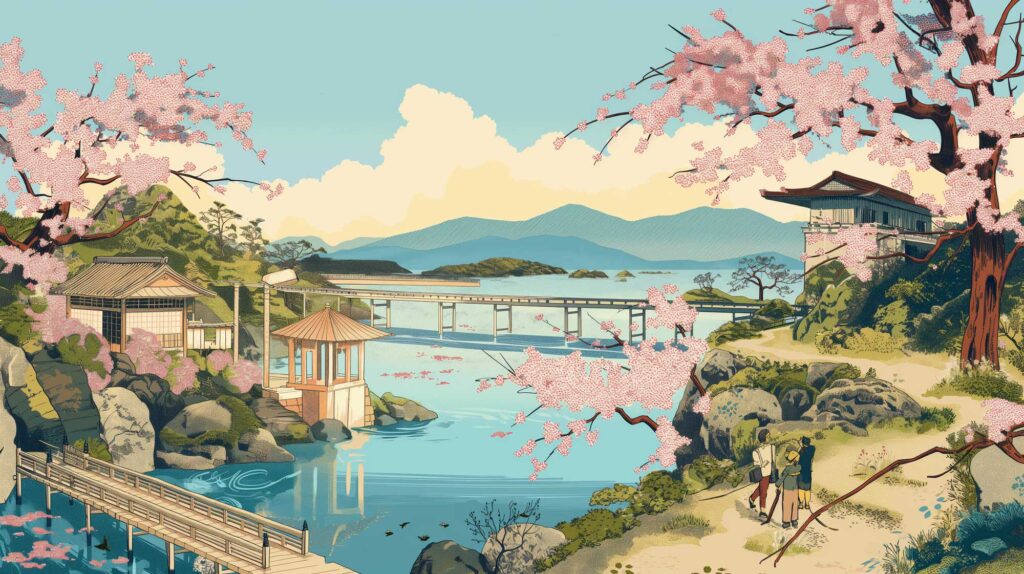
Our Service Offerings
1. Sustainable Tour Planning & Development
-
-
Designing low-impact itineraries that balance tourism revenue with conservation — built on carrying-capacity analysis and seasonal scheduling to prevent ecosystem stress.
- Customized low-impact travel routes with carbon-offset integration and off-peak scheduling to reduce overtourism
- Collaborations with eco-resorts, sustainable lodgings, and community-operated facilities to maximize local procurement
- Nature-focused cultural immersion experiences across Japan’s 34 national parks — from subarctic Hokkaido to subtropical Okinawa
-
2. Eco-Friendly Adventure & Nature Tourism
-
- Tapping into Japan’s USD 30.7 billion adventure tourism market (19.4% CAGR) with responsible experiences tied to wildlife and ecosystem conservation.
- Guided eco-hiking, birdwatching, and wildlife observation with certified nature guides following the Yakushima accreditation standard
- Sustainable marine tourism, island conservation, and coral reef education programs in protected areas
- Cycling, forest bathing, and alternative low-impact transport options integrated with environmental education briefings
- Tapping into Japan’s USD 30.7 billion adventure tourism market (19.4% CAGR) with responsible experiences tied to wildlife and ecosystem conservation.
3. Cultural and Rural Tourism Enhancement
-
-
Supporting local communities through tourism models proven to generate measurable economic multiplier effects — as demonstrated by Miyama Town’s 700,000 annual visitors.
- Promotion of off-the-beaten-path destinations and satoyama village experiences with high local procurement strategies
- Traditional craftsmanship workshops, farmstay experiences, and circular agriculture tours (e.g., Amagi Town’s closed-loop model)
- Community-based tourism partnerships including DMO formation, travel agency registration, and revenue-sharing frameworks
-
4. Green Hospitality & Responsible Accommodation
-
-
Helping accommodation providers earn internationally recognized sustainability credentials that command 20–40% pricing premiums.
- Green Key certification via JARTA — Japanese-language audits and localized assessment available since 2022, with strong European market recognition
- GSTC-aligned eco-lodge consulting for ryokan, minshuku, and boutique properties seeking global corporate travel procurement access
- Green infrastructure consulting: energy efficiency, water conservation, waste reduction, and carbon-neutral operations planning
-
5. Awareness & Advocacy for Sustainable Tourism
-
-
Building environmental literacy programs that measurably influence visitor behavior, increase conservation compliance, and raise satisfaction ratings.
- Environmental conservation workshops with ecology briefings — research shows these increase willingness to comply with park rules
- Digital campaigns and multilingual content promoting sustainable travel across English, Chinese, Korean, and European markets
- Green certification programs and sustainability training for tourism operators, aligned with GSTC and JARTA frameworks
-
6. Certification & Regulatory Consulting
-
-
Navigating Japan’s layered certification landscape — from GSTC and JSTS-D to travel business licensing and national park permits.
- End-to-end GSTC, Green Key (JARTA), and JSTS-D certification support: gap analysis, documentation, audit preparation, and renewal
- Travel business license advisory across all four tiers (Class 1–3 and Regional Limited) including the October 2025 visa reforms
- National park permit navigation, guide certification support, and Ministry of Environment eco-tourism promotion applications
-
Certification Pathways We Support
Choosing the right sustainability certification — or layering multiple frameworks strategically — is one of the highest-impact decisions an eco-tourism operator can make. Certified sustainable experiences command 20–40% price premiums and unlock corporate procurement channels that increasingly mandate third-party verification. DMPJ guides clients through every pathway, from gap analysis to audit day.
GSTC
Best for: Tour operators, DMCs
Cost: USD 8,000–15,000
Timeline: 6–12 months
Recognition: Global corporate travel, North America, Asia-Pacific
Green Key
Best for: Hotels, ryokan, eco-lodges
Cost: USD 3,000–8,000
Timeline: 4–6 months
Recognition: Europe, Scandinavia, corporate retreats
JSTS-D
Best for: Destinations, DMOs, municipalities
Cost: USD 10,000–20,000
Timeline: 6–12 months
Recognition: Japan domestic, government funding, GSTC-equivalent
MoE Eco-Tourism
Best for: Municipalities with natural resources
Cost: Planning costs only
Timeline: 6–18 months
Recognition: Government grants, legal resource protection
Tricolage became Japan’s first GSTC-certified tour operator in December 2022, proving the international standard is achievable within the Japanese business context. The incremental cost of a second certification is typically 40–60% less than the first, making strategic layering an efficient path to maximum market coverage.
Why Choose DMPJ for Eco-Tourism Development?
- Deep Knowledge of Japan’s Natural & Cultural Sites: Expertise spanning all 34 national parks and 28 government-designated eco-tourism promotion regions — from alpine Daisetsuzan to subtropical Keramashoto. We navigate the satoyama landscapes, ryokan traditions, and protected area frameworks that make Japan’s eco-tourism offering globally unique.
- Commitment to Ethical & Sustainable Practices: We apply the same certification standards we recommend — GSTC, Green Key, and JSTS-D — to ensure responsible travel that generates measurable economic multiplier effects for host communities while preserving natural and cultural assets for future generations.
- Strong Network with Local Eco-Friendly Businesses: Named partnerships with community DMOs, prefectural tourism boards, eco-lodge operators, and certified nature guides across Japan. Our relationships are built face-to-face over years — not assembled on demand — giving clients access to the community networks that determine project success.
- Bilingual Consulting & Market Access: Native-level Japanese for government liaison, licensing applications, and community engagement — paired with professional English, Chinese, and Korean for international marketing, certification documentation, and media outreach to global source markets.
- Proven ROI-Driven Strategies: From brand building (6–12 month payback) through certification (12–18 months) to community partnership development (18–24 months), we build phased investment plans with realistic timelines anchored to documented benchmarks from Japan’s most successful eco-tourism communities.
Our Approach
01 Understanding Local Ecosystems
Conducting carrying-capacity analysis, biodiversity assessments, and stakeholder mapping across target regions — working within Japan's Natural Parks Law zoning framework to identify sustainable tourism opportunities.
02 Sustainable Itinerary Development
Crafting low-impact itineraries with carbon-offset integration, off-peak scheduling, and high local procurement — designed to maximize per-visitor spending while minimizing environmental footprint.
03 Collaboration with Local Communities
Building partnerships with DMOs, community cooperatives, and certified guides — establishing revenue-sharing models like Miyama Town's conservation fee framework that fund preservation through tourism income.
04 Implementation & Traveler Engagement
Launching multilingual digital campaigns, securing sustainability certifications (GSTC, Green Key, JSTS-D), and activating international media outreach to connect experiences with the right markets.
05 Continuous Monitoring & Adaptation
Tracking visitor impact metrics, certification compliance, and revenue performance — adjusting strategies seasonally and supporting annual surveillance audits to maintain certification standing.
Proven Results: Eco-Tourism Success Stories from Rural Japan
Japan’s most successful eco-tourism communities share a common pattern: strong local governance, revenue-to-conservation linkage, and phased development measured in years. These documented case studies demonstrate what structured eco-tourism development achieves at a scale and resource level comparable to SME operators.
Miyama Town, Kyoto
700,000 annual visitors | Population: 3,500
Registered its tourism DMO as a licensed travel agency, designed high-local-procurement tours using community bus companies, guides, and lunch facilities, and charges a ¥300 conservation fee per trekker to fund forest preservation. Recognized as a UN Tourism Best Tourism Village — one of only eight in Japan.
Aya Town, Miyazaki
50+ Years of Conservation | 100-Year Forest Restoration
Protects Japan’s largest lucidophyllous (evergreen broadleaf) forest, maintained since the 1960s. A public-private AEON forest partnership anchors experiential tourism with participatory restoration activities. Effectively meets the Convention on Biological Diversity’s 2050 targets decades ahead of schedule.
Amagi Town, Kagoshima
Best Tourism Village 2024 | Selected from 260 Global Entries
First community in western Japan to receive UN Tourism’s Best Tourism Village designation. Turns circular agriculture — sugarcane leaves feeding cattle, composted dung enriching soil — into visitor-facing content, stabilizing farming household incomes while showcasing sustainable food systems.

Industries We Serve
Travel Agencies & Tour Operators
Hospitality & Eco-Lodging
Cultural & Environmental NGOs
Local Governments & Tourism Boards
Adventure & Outdoor Activities Providers
Investment & ROI: What to Expect
Eco-tourism development is a phased investment with staggered returns — not a campaign with a single break-even date. Understanding realistic timelines helps you plan confidently and allocate budget where it generates the strongest returns.
Brand & SEO
6–12 Months
Multilingual SEO and international media outreach produce measurable organic traffic growth within the first year.
Certification
12–18 Months
Returns from booking premiums (20–40%) and procurement eligibility begin after certification is obtained.
Community
18–24 Months
Deep partnerships generate full economic multiplier effects and create competitive moats others cannot replicate.
Gov. Grants
12–24 Months
Government funding cycles require early positioning — the Tourism Agency targets 100 JSTS-D regions, creating ongoing opportunities.
Budget ranges span JPY 3–7 million for modular engagements (SEO, certification readiness) to JPY 8–25 million for integrated programs covering brand positioning, content production, certification, and sustained media relations. Industry benchmarks confirm outsourcing delivers stronger ROI than internal hiring for projects in this range.
Latest Insights on Eco Tourism Development

What Is Eco-Tourism Development in Japan? A Pri…
Discover Japan’s $14.49B eco-tourism market — key players, five development pillars, and entry strat

GSTC vs Green Key vs JSTS-D: Comparing Eco-Tour…
Compare GSTC, Green Key, and JSTS-D certifications for Japan eco-tourism operators. Costs, timelines

How to Choose an Eco-Tourism Development Partne…
Evaluate eco-tourism development partners in Japan with this 10-point buyer’s checklist. Compare pri
The ROI of Eco-Tourism Investment in Japan: Cos…
What does eco-tourism development cost in Japan? See real benchmarks from JPY 3M to 50M+, revenue up
5 Eco-Tourism Success Stories from Rural Japan:…
Discover 5 eco-tourism success stories from rural Japan — Miyama, Aya, Amagi, and more. Real results

How to Launch an Eco-Tourism Business in Japan:…
Step-by-step guide to launching an eco-tourism business in Japan — licensing, national park permits,
Our Projects
Sorry, no posts matched your criteria.
Join the operators and communities building Japan’s $36 billion eco-tourism future — with customized strategies, certification guidance, and bilingual market access from DMPJ.
Get in Touch
CONTACT US