


28 Sensory Marketing Campaigns | DMPJ
At Daisho Media Partners Japan (DMPJ), we craft sensory-driven marketing campaigns that create lasting emotional connections between brands and their audiences. A 2026 Nielsen study of 12,400 consumers across eighteen countries found that campaigns engaging three or more senses achieve a 73% brand recall rate—compared to just 21% for visual-only approaches. In Japan, where cultural traditions of monozukuri (craftsmanship) and wa (harmony) have refined multisensory appreciation for centuries, brands that orchestrate scent, sound, touch, and sight together unlock unparalleled customer loyalty. We combine Japanese cultural insight, behavioral neuroscience, and cutting-edge sensory technology to deliver campaigns with documented sales uplifts of 10–17% and measurable returns from day one.
Explore Our Blog
Sensory Marketing Insights & Strategy
From ROI measurement frameworks and budget planning guides to luxury retail case studies and step-by-step strategy playbooks—explore our deep-dive articles on building multisensory brand experiences that deliver measurable results.
Our Service Offerings
1. Scent Marketing & Olfactory Branding
-
-
The olfactory nerve connects directly to the brain’s limbic system—scent triggers emotion before conscious thought.
- Custom signature fragrances for retail, hospitality, and events—developed with partners like Air Aroma Japan
- Zone-specific ambient scenting via HVAC-integrated and standalone diffusion systems
- Research-backed scent strategy: scented retail zones show up to 26% category sales lift in controlled studies
-
2. Immersive Visual Branding
-
-
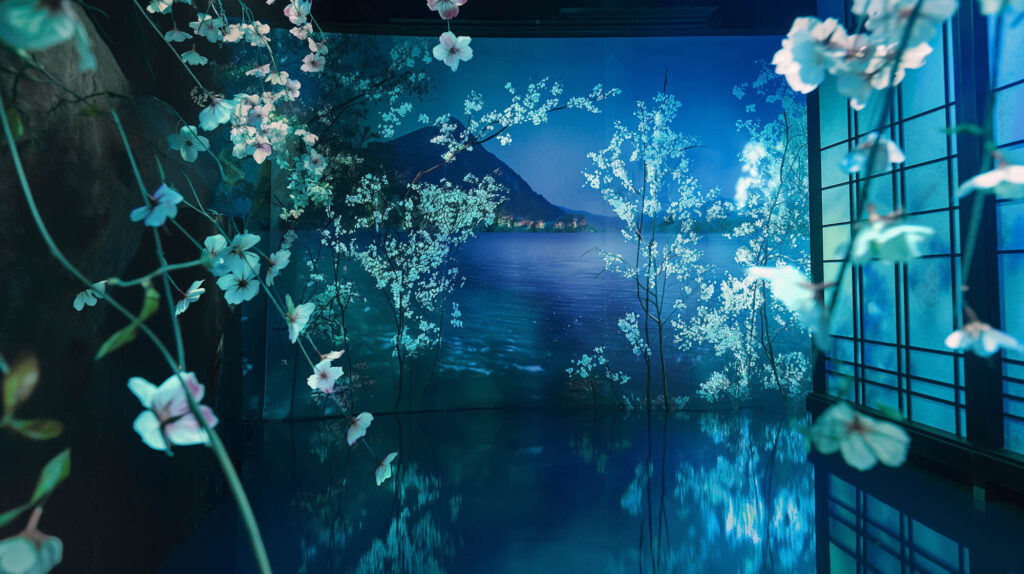
Transforming physical spaces into dynamic visual storytelling environments that extend dwell time and generate earned media.
- Projection mapping, adaptive lighting, and interactive displays responsive to proximity and gesture
- Data-driven visual merchandising with heat mapping and customer behavior analytics
- Seamless fusion of traditional Japanese aesthetics and contemporary digital design
-
3. Audio Branding & Sonic Identity
-
-
Designing signature soundscapes that measurably influence spending, dwell time, and perceived quality.
- Custom sonic identities including sound logos, curated playlists, and brand-specific compositions
- Spatial audio installations using object-based 3D sound via our Astro Spatial Audio / Audio Brains Japan partnership
- Tempo-calibrated soundscapes proven to influence spending patterns and perceived wait times
-
4. Tactile Engagement & Experiential Design
-
-
Haptic interaction shifts buyer psychology from detached evaluation to a sense of ownership—touch is a conversion strategy.
- Premium textured packaging and hand-finished surfaces that communicate quality before a product is opened
- AR and VR touch-based experiences with precision haptic feedback using TDK PowerHap and Nidec components
- Material selection for experiential spaces—stone, wood, fabric, metal—shaping perception at a pre-conscious level
-
5. Multisensory Event Experiences
-
-
Japan’s events industry is projected to reach $84.7 billion by 2034—immersive activations are the future of brand engagement.
- Pop-up experiences coordinating all senses—from immersive dining to fully themed product launches
- Interactive brand showcases designed for maximum social sharing and earned media amplification
- Sequential sensory storytelling inspired by leading formats like the Regent Taste Studio’s choreographed multi-chapter experiences
-
6. Gustatory Marketing & Taste-Driven Activations
-
-
Turning taste into a narrative tool that anchors brand memory and justifies premium positioning.
- Immersive dining experience design choreographing food, music, visual art, and spatial elements
- Brand-aligned flavor activations, sampling programs, and edible brand collateral
- Cross-sensory culinary design where ambient scent and soundtrack amplify the dining narrative
-
The Data Behind Sensory Marketing
Research from Nielsen, McKinsey, and the Retail Industry Leaders Association confirms what leading brands already know: multisensory campaigns dramatically outperform traditional approaches across every metric that matters.
73%
Brand Recall Rate
for campaigns engaging 3+ senses, versus just 21% for visual-only campaigns (Nielsen 2026, n=12,400)
17.3%
Average Sales Uplift
from fully integrated multisensory campaigns across 640 brands analyzed by McKinsey
14.8%
Retail Sales Increase
in four-sense retail environments across a controlled 480-store trial by RILA
93%
Gen Z Expectation
of Gen Z consumers expect brands to engage at least three senses simultaneously (Kantar 2026)
+26%
Category Sales Lift in scented retail zones versus unscented areas in controlled INTERSPORT trial
+6 min
Dwell Time Extension when customers experienced coordinated scent, sound, and visual elements
$84.7B
Japan Events Industry by 2034—up from $32.7B in 2025, fueled by demand for real-world experiences
Why Choose DMPJ for Sensory Marketing?
- Deep Understanding of Multisensory Marketing: Proven expertise in orchestrating scent, sound, touch, and sight into campaigns that achieve up to 73% brand recall—3.5× the rate of visual-only approaches. Our strategies leverage the cross-modal multiplier effect, where congruent sensory stimuli produce exponential rather than additive impact.
- Cultural and Psychological Sensory Insights: Every campaign is grounded in Japanese aesthetic principles like monozukuri (craftsmanship) and wa (harmony), combined with global neuroscience research on olfactory memory, cross-modal perception, and emotional encoding. We bridge sensory expectations across cultures for brands entering Japan or expanding internationally.
- Cutting-Edge Technological Integration: Direct partnerships with Japan’s leading sensory technology ecosystem—from Aromajoin’s digital scent devices to Astro Spatial Audio’s 3D sound platforms, Air Aroma Japan’s custom fragrance systems, and TDK’s precision haptic components. We select and integrate the right technology stack for your specific environment.
- Bespoke Strategies with Built-In Measurement: Custom-calibrated campaigns with rigorous ROI tracking from day one. We measure dwell time, sales lift, brand recall, emotional response, and repeat visit rates through structured A/B testing and pre/post analysis—turning creative investment into a quantifiable business experiment.
Our Approach
01 Understanding Brand Sensory Identity
Conducting comprehensive sensory audits across every customer touchpoint to map existing signals and identify high-impact opportunities.
02 Strategic Multisensory Integration
Designing congruent sensory strategies where scent, sound, sight, and touch reinforce a unified emotional brand narrative.
03 Development & Implementation
Deploying precision-calibrated sensory technology—from HVAC-integrated scent diffusion to spatial audio—with hands-on installation management.
04 User Experience Testing
Measuring dwell time, sales lift, brand recall, and emotional response through rigorous A/B testing and pre/post analysis.
05 Continuous Innovation & Adaptation
Quarterly performance reviews and ongoing optimization based on data, cultural shifts, and emerging sensory technologies.

Industries We Serve
Luxury Retail & Hospitality
Experiential Marketing Agencies
Wellness & Lifestyle Brands
Entertainment & Event Production
Technology & Innovation Hubs
Latest Insights on Sensory Marketing Campaigns

What Is Sensory Marketing? A Complete Guide to …
Learn what sensory marketing is, how the five senses drive 73% brand recall vs. 21% for visual-only

Sensory Marketing for Luxury Retail and Hospita…
Discover how top brands in Japan use scent, sound, and touch to drive luxury retail sales and hotel

Sensory Marketing vs. Traditional Experiential …
Compare sensory marketing vs experiential marketing on cost, ROI, and brand recall. Learn which appr

How to Choose a Sensory Marketing Agency: A Buy…
Seven criteria for evaluating a sensory marketing agency, from multisensory expertise to cultural fi

Sensory Marketing Campaign Costs and ROI: What …
Realistic sensory marketing campaign costs (¥2M–30M+), pricing models, and ROI measurement framework

How to Build a Multisensory Brand Strategy: A S…
A practical 6-step guide to building a sensory marketing plan—from brand audit to scaled rollout. In
Our Projects
Sorry, no posts matched your criteria.
Frequently Asked Questions
Is sensory marketing only for luxury brands?
No. While luxury retail and hospitality brands were early adopters, sensory marketing delivers measurable results across price points and industries. A peer-reviewed study of mid-market boutiques found that coordinated lighting, scent, music, and tactile staging significantly increased emotional attachment and purchase behavior. The INTERSPORT Amsterdam trial—a mainstream sporting goods store—recorded a 10% overall sales increase and nearly six additional minutes of dwell time when multisensory elements were activated.
Can you measure the ROI of sensory marketing?
Absolutely. Modern sensory campaigns track dwell time via foot-traffic analytics, sales lift through POS data in sensory versus control zones, brand recall through post-exposure surveys, repeat visit rates through loyalty program data, and emotional response through biometric and survey instruments. The INTERSPORT trial, the RILA 480-store study, and McDonald’s Netherlands scent campaign all demonstrated rigorous, quantifiable results—from a 14% sales increase to €49.9 million in earned media value.
How much does a sensory marketing campaign typically cost?
Budget ranges depend on scope and the number of sensory channels activated. Entry-level pilots typically range from ¥2–5 million for a single-channel test over 1–3 months. Mid-range campaigns engaging 2–3 senses across multiple months range from ¥5–15 million. Comprehensive multi-location initiatives start at ¥15–30 million and above. DMPJ builds custom proposals based on your specific goals, industry, and budget—no templated packages.
How long before we see results?
Initial behavioral changes—increased dwell time, higher engagement—are often visible within the first weeks of activation. We recommend tracking performance over 60–90 days minimum to establish sustainable baselines beyond novelty effects. The true power of sensory branding compounds over time: Singapore Airlines maintained its signature Stefan Floridian Waters cabin fragrance for over twenty years, transforming it into a brand asset as recognizable as their visual identity.
How do you adapt sensory strategies for the Japanese market?
Japan’s cultural traditions—from the deliberate quiet of a ryokan to the sensory layers of kodo incense ceremony—have cultivated consumer sensibilities that reward restraint and harmony over intensity. A fragrance that signals luxury in Paris may feel overpowering in Osaka. DMPJ’s bilingual, bicultural team bridges Japanese sensory psychology and international brand standards, ensuring campaigns resonate authentically with domestic audiences while maintaining global brand consistency.
Transform your brand with data-driven sensory marketing—proven to deliver 73% recall rates, measurable sales growth, and lasting emotional loyalty.
Get in Touch
CONTACT US