
09. International Art and Culture Exchange | DMPJ
Japan’s cultural tourism market is projected to grow from $62.7 billion in 2025 to $113.2 billion by 2035 — and the country welcomed a record 36.9 million international visitors in 2024, with cultural experiences driving an ever-larger share of ¥8.1 trillion in total inbound spending. At Daisho Media Partners Japan (DMPJ), we help small and mid-sized organizations capitalize on this momentum by facilitating cross-border cultural programs that foster artistic collaboration and lasting international partnerships. Our expertise lies in bridging the gap between artists, institutions, and organizations from diverse backgrounds — from navigating the Japan Foundation’s 30+ exchange programs to coordinating bilingual logistics, grant applications, and post-program relationship development that turns single events into multi-year partnerships averaging 3.4 years.
Explore Our Blog
Insights into International Art & Culture Exchange
Explore in-depth guides covering Japan’s cultural exchange landscape, partner selection frameworks for SMEs, budget planning with real cost data, government grant navigation, ROI benchmarks, and success stories from organizations with fewer than 20 staff members achieving international impact.
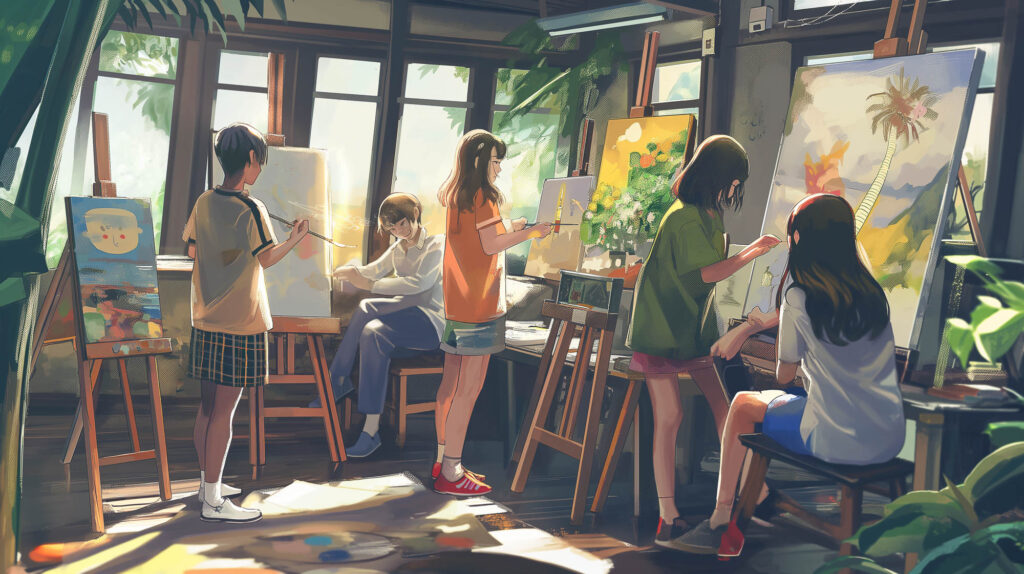
Japan’s Cultural Exchange Landscape
Japan’s art market grew 11% between 2019 and 2023 — compared to just 1% worldwide — signaling genuine demand growth that creates strategic opportunities for organizations ready to engage.
$113.2B
Japan’s projected cultural tourism market by 2035, growing at 6.1% CAGR
36.9M
International visitors to Japan in 2024 — surpassing the pre-pandemic record by 16%
30+
Distinct exchange programs administered by the Japan Foundation, covering arts, education, and publishing
78.3%
Of Japanese business leaders who believe cultural exchange positively impacts the economy
Our Service Offerings
1. Artist Exchange Programs
-
-
Fostering Creative Collaborations Across Borders
- Structured bilateral residency programs connecting artists with Japanese institutions — 87% of participants secure international opportunities within 18 months
- Cross-cultural exhibitions and joint showcases with partner museums, galleries, and art fairs
- Grant navigation and funding assistance including Japan Foundation, Arts Council Tokyo, and bilateral programs covering 30–70% of project costs
-
2. Cultural Festival Coordination
-
-
Celebrating Diversity Through Festivals and Events
- End-to-end planning and production of multi-national cultural festivals with bilingual on-site coordination
- Coordinating performances, exhibitions, and interactive workshops — including hybrid digital-physical formats that increase collaborative outcomes by 30%
- Partnering with embassies, cultural institutions, and regional organizations from Tokyo to rural cultural hubs in Kanazawa, Kyoto, and beyond
-
3. Cross-Border Educational Programs
-
-
Enhancing Artistic Knowledge Through Global Education
- International workshops, lectures, and training programs modeled on proven bilateral exchange frameworks like the Kyoto Art Center’s residency program
- Artist mentorship and development initiatives — 92% of participants in structured programs develop new artistic directions influenced by cross-cultural experience
- Cultural immersion programs for students and professionals, with visa coordination and accommodation logistics handled end to end
-
4. Collaborative Art Projects
-
-
Bridging Cultures Through Joint Creations
- International mural and public art collaborations connecting Japanese and overseas artists through structured co-creation residencies
- Multinational film and media co-productions leveraging Japan’s growing appeal as an international production location
- Joint publishing, literary translation, and curatorial research projects with long-term institutional partnership development
-
5. Museum & Gallery Partnerships
-
-
Expanding Global Access to Japanese & International Art
- Exhibition planning and curation support — from single-venue shows to multi-city touring programs across Japan’s 5,600+ registered museums
- Artwork transportation, customs clearance, insurance coordination, and preservation consultation for international loans
- Digital and virtual gallery initiatives integrating live-streamed events, virtual tours, and online collaboration spaces for sustained engagement
-
Why Choose DMPJ for Cultural Exchange?
- Extensive Cultural Network: Strong partnerships with global arts organizations, including direct access to the Japan Foundation’s 30+ exchange programs, Arts Council Tokyo grant networks, and regional cultural institutions from Hokkaido to Okinawa. Our relationships are active and current — we can name the specific institutional contacts who will champion your project.
- Deep Understanding of Japanese Traditions: Expertise in bridging modern and historical artistry, with native fluency in Japanese institutional decision-making — from the consensus-building process (nemawashi) to formal approval protocols that shape partnership timelines. We prevent the cultural misunderstandings that cause 75% of intermediary-dependent international projects to underperform.
- Multilingual Support: Full cultural interpretation — not just translation — ensuring seamless communication between international participants. Our bilingual team navigates the nuances where a polite “we will consider it” actually means “no,” coaching your team through signals before they become costly misunderstandings.
- Full-Service Event & Program Coordination: End-to-end management from initial partner identification through post-program relationship development — covering venue contracts, art shipping and customs clearance, artist visa processing, insurance, grant applications, and bilingual on-site production. Programs scaled from pilot budgets of ¥2 million to flagship initiatives of ¥20 million and above.
- SME-Focused Approach: Purpose-built for organizations with fewer than 20 staff. We navigate grant programs where 68% of recent recipients are small organizations, structure milestone-based payments that protect your investment, and design phased programs — from a ¥2–5 million pilot to multi-year strategic partnerships — so you build internal capability as you grow.
Proven Results From Small Organizations
Organizations with fewer than 20 staff members and annual budgets under $1.5 million are achieving these documented outcomes through structured cultural exchange programs — proof that impactful international collaboration does not require massive resources.
87%
Of exchange program artists secure international exhibition opportunities within 18 months of participation
28.7%
Average increase in international revenue within 18 months for SMEs completing funded cultural exchange programs
3.4 Yrs
Average partnership longevity with program support — versus 2.1 years for relationships formed through trade fairs alone
2.3×
Faster market entry for SMEs using JETRO and Japan Foundation support compared to non-participants
From the 15-person ARCUS Project earning a Top 10 global residency ranking, to a 7-person NPO building a Tokyo–Seoul–Berlin performance network, to an 8-person curation company generating $8.3 million in artist income — small organizations with the right coordination partner are producing results that rival programs with ten times their resources.
Our Approach
01 Cultural Research & Planning
Analyzing your objectives against Japan's cultural landscape, identifying aligned institutions from 5,600+ museums and thousands of cultural organizations, and mapping applicable government grants.
02 Strategic Partnerships
Leveraging active relationships with museums, galleries, festivals, and government cultural agencies — securing warm introductions that accelerate trust-building with Japanese institutions.
03 Program Development
Designing programs aligned with your business objectives and budget — from ¥2M pilot workshops to multi-year institutional partnerships — with built-in hybrid digital-physical components.
4. Event Execution
Managing bilingual logistics, venue contracts, art shipping and customs, artist visa processing, interpreting, insurance, and on-site production across Japan.
05 Impact Assessment
Tracking partnership longevity, revenue impact, media reach, and institutional network growth — then converting one-time exchanges into lasting, compounding partnerships.
Funding Your Project
Japan has a well-developed ecosystem of government grants that can offset 30–70% of cultural exchange project costs. Many SMEs never apply, assuming they won’t qualify — yet Arts Council Tokyo reports 38% approval for first-time SME applicants with clear international scope. DMPJ navigates these programs on your behalf.
Japan Foundation Programs
-
-
Over 30 Exchange Programs Available
- Artist dispatching grants covering 50–70% of travel and accommodation
- WA2.0 grants up to ¥4M for ASEAN-focused organizational exchange
- Performing arts co-production grants open to any Japan-based organization
-
Arts Council Tokyo Grants
-
-
Awards from ¥500K to ¥4M
- Creation and international exchange grants for Tokyo-based applicants
- 68% of recent recipients are organizations with fewer than 20 employees
- Multiple award categories including international co-productions and exhibitions
-
Bilateral & International Funds
-
-
Cross-Border Partnership Funding
- EU-Japan Fest Mobility Support for planning travel (¥50K–150K per project)
- US-Japan Foundation Creative Exchange grants up to $50,000
- Asian Cultural Council fellowships of $25,000–$50,000 for professionals
-
Industries We Serve
Art Institutions
Cultural Organizations
Educational Institutions
Tourism & Hospitality
Film & Media Collaborations
Traditional Craft SMEs
Latest Insights on International Art And Culture Exchange

What Is International Art and Culture Exchange?…
Discover what international art and culture exchange means for business. Learn why Japan leads growt

How to Choose a Cultural Exchange Partner for J…
Evaluate Japan cultural exchange partners with this SME checklist. Seven criteria, red flags, and co

In-House vs. Outsourced Cultural Exchange Progr…
Comparing in-house vs outsourced cultural exchange programs for SMEs entering Japan. Costs, risks, a

How to Plan Your First Japan Cultural Exchange …
Step-by-step playbook for SMEs planning a Japan cultural exchange project — covering partner identif

5 Real-World Examples of Successful Japan Cultu…
Japan cultural exchange success stories from organizations with under 20 staff. Real examples with b

Japan Cultural Exchange Costs, Grants, and ROI:…
Real cost ranges (¥2M–20M+), government grants up to ¥4M, and documented ROI data for Japan cultural
Our Projects
Sorry, no posts matched your criteria.
Frequently Asked Questions
What does a cultural exchange project typically cost?
Pilot programs start at ¥2–5 million ($14,000–$35,000) for a single workshop, small exhibition, or one-way artist exchange. Mid-scale programs — such as co-curated exhibitions or bilateral residencies — range from ¥5–20 million ($35,000–$140,000). Government grants from the Japan Foundation, Arts Council Tokyo, and bilateral funds can offset 30–70% of these costs.
Is cultural exchange only for large corporations?
Not anymore. Arts Council Tokyo reports that 68% of recent grant recipients are organizations with fewer than 20 employees. Programs like the ARCUS Project — a 15-person team ranked among the world’s Top 10 artist residency programs — demonstrate that small organizations with the right coordination partner achieve outsized international impact.
How do you measure ROI on cultural exchange?
We track partnership longevity (averaging 3.4 years with program support), international revenue growth (28.7% average increase within 18 months), media reach across target markets, and institutional network expansion. Japanese government agencies now require 6- and 12-month follow-up reports tracking these metrics, and we build this evaluation framework into every program from the start.
Can we start small and scale up?
Absolutely — and we recommend it. Most successful long-term partnerships begin with a contained pilot project that validates the concept, builds internal knowledge, and generates the measurable results needed to justify scaling. Our service is designed to support this journey from full coordination to strategic advisory as your team builds cultural competency.
Do we need to speak Japanese?
No. DMPJ provides full cultural interpretation — not just translation — handling all partner communication, contract negotiation, event coordination, and institutional relationship management in both languages. We coach your team through the cultural signals that matter: understanding when a polite deflection is a soft “no” and how to structure proposals for Japan’s consensus-driven decision-making process.
Ready to turn cultural exchange into measurable business growth? Contact us to design a program — from a ¥2M pilot to a multi-year partnership — built around your objectives.
Get in Touch
CONTACT US