


06. Technical Support for Events | DMPJ
At Daisho Media Partners Japan (DMPJ), we deliver cutting-edge technical support across five integrated pillars — audiovisual setup, equipment rental, on-site technical assistance, live streaming and broadcasting, and event technology consulting — so your event runs without a single visible seam. We operate in a discipline that has grown into a serious profession: the global event management services market reached $11.3 billion in 2024 and is projected to hit $42.6 billion by 2034, a 14.2 percent compound annual growth rate, while Japan’s own event management software market is expanding 16.7 percent annually toward roughly $687 million by 2030. In a market where flawless execution signals respect for your audience, a clean audio mix, sharp displays, and a stable stream are not luxuries — they protect the 75 to 90 percent of your budget spent on venue, catering, and marketing. From acoustically tuned sound systems to broadcast-grade streaming that reaches Tokyo, Singapore, and London at once, we create immersive experiences that disappear into the background and leave your message — not your equipment — as the thing your guests remember.
Explore Our Blog
Mastering Event Technology: Insights & Trends
Go beyond the basics with practical guidance written for planners operating in Japan. Discover deep-dives on the latest event tech innovations, detailed cost breakdowns with real 2025–2026 yen figures, an eight-point buyer’s checklist for vetting AV providers, and documented case studies — including a market-entry campaign that delivered 358 percent ROI and over 80 percent penetration of its target account list. Each article distills hard-won lessons on AV setup, hybrid streaming, Radio Law and PSE compliance, and bilingual production so you can elevate every event you run.
Our Service Offerings
1. Audiovisual (AV) Setup
-
-
Creating Immersive Event Environments
- Professional sound systems and lighting setups tuned to each room — we analyze ceiling height, wall materials, and seating geometry to deliver even coverage with no feedback and no dead spots, the difference between a speaker who commands the room and one fighting the acoustics.
- High-definition video displays and projectors selected by ambient light, throw distance, and content resolution, from standard 16:9 screens to indoor 3.9mm-pitch LED walls — visuals that stay crisp instead of washing out under house lighting.
- Customized AV design for unique event spaces, including confidence monitors, interpreter feeds, and secondary display channels for bilingual programs where Japanese and English content run side by side.
-
2. Equipment Rental Services
-
-
Flexible Solutions for Every Event
- State-of-the-art audio and video equipment — LED walls, wireless mics, switchers, and 4K monitors — available without capital expense, so you spec what the event demands rather than what a warehouse happens to hold as panels obsolesce on an 18–24 month cycle.
- Stage lighting and rigging gear scaled to the venue, from intimate boardroom briefings to 500-person conferences at Makuhari Messe, with all electrical gear meeting Japan’s PSE certification standards so nothing risks confiscation at the venue door.
- Reliable backup systems for uninterrupted performance: redundant audio paths, spare projectors on standby, and failover streaming encoders pre-configured on-site — the standard that separates professional support from commodity rentals.
-
3. On-Site Technical Support
-
- Expert Technicians for Seamless Operations
- Dedicated AV professionals who monitor audio levels, video signal integrity, and network throughput continuously throughout your event, making micro-adjustments the audience never perceives — the difference between a five-second fix behind the scenes and a two-minute silence everyone remembers.
- Live troubleshooting and real-time adjustments backed by clear escalation protocols, so a failed microphone battery or locked switcher is recovered before anyone in the room notices something went wrong.
- Multilingual technical staff for global events — in a market where fewer than 25 percent of mid-sized providers’ field technicians work comfortably in English, our crews diagnose a ground loop on a wireless lavalier while communicating directly with both the Japanese venue manager and an English-speaking keynote speaker.
- Expert Technicians for Seamless Operations
4. Live Streaming and Broadcasting
-
-
Expanding Your Event’s Reach Globally
- High-quality live streaming setups built on dedicated fiber or bonded cellular with guaranteed symmetric bandwidth — typically 50 Mbps upstream minimum per 1080p stream — never the house Wi-Fi that collapses under sustained upstream load mid-keynote.
- Multi-platform broadcasting capabilities with multi-camera production, isolated audio mixes, and real-time graphics, reaching the remote viewer who sees only what your switcher chooses to show; Japan’s live streaming market is growing at a 25.6 percent annual rate, and audiences now expect broadcast-quality access as standard.
- Secure and stable network management with firewall, VLAN segmentation, and traffic shaping — because one rogue device on an open network can saturate your upstream link at the worst possible moment.
-
5. Event Technology Consulting
-
-
Tailored Solutions for Your Event Needs
- Technical planning and strategy development aligned to your business objective, translating event goals, audience profile, and budget into a specific equipment plan, signal flow, and staffing model — data-driven pre-planning that directly improves ROI measurement before a single cable is run.
- Site inspections and risk assessments conducted on-location to flag limited power circuits, Wi-Fi dead zones, rigging weight limits in older buildings, and load-in windows — catching the problems that would otherwise surface on event day.
- Recommendations for optimal tech integration, including Radio Law–compliant wireless plans, PSE-certified gear, and APPI-aware handling of attendee data captured through registration or lead scanning.
-
Key Statistics & Market Insights
A Market on a Steep Curve
-
-
Event Technology Is No Longer a Cottage Industry
- The global event management services market reached $11.3 billion in 2024 and is forecast to hit $42.6 billion by 2034 — a 14.2 percent compound annual growth rate.
- Japan’s event management software market is projected to grow from $278 million in 2024 to $687 million by 2030, a 16.7 percent CAGR that outpaces the global average, with the services segment expanding fastest.
- Japan’s virtual events market has already reached roughly $13.57 billion, raising the baseline for what audiences expect from technical execution.
-
The Real Cost of Failure
-
-
When the Technology Fails, It’s All Anyone Remembers
- Roughly 63 percent of exhibitor complaints at trade shows relate to technical failures — not content, booth design, or staffing.
- AV and technical spend accounts for just 10 to 25 percent of a corporate event budget, yet that share protects the other 75 to 90 percent spent on venue, catering, and marketing.
- High-impact IT outages cost up to $1.9 million per hour, with the median organization losing 77 hours a year — scaled to a single investor briefing or product launch, even a brief stream failure carries real financial and reputational cost.
-
Hybrid & Bilingual Demand
-
-
Where Specialist Execution Pays Off
- 74.5 percent of event planners have adopted hybrid formats, and 63 percent are increasing their investment in virtual capabilities heading into 2026.
- Fewer than 25 percent of field technicians at mid-sized Japanese providers communicate effectively in English, making bilingual crews a genuine scarcity rather than a checkbox.
- One foreign technology company that switched to a specialized bilingual technical partner reached over 80 percent of its target account list at a $105 cost per lead and a documented 358 percent ROI.
-
Why Choose DMPJ for Technical Support?
- Cutting-Edge Equipment: Access to the latest AV technologies — 4K switching, indoor LED walls, broadcast-quality cameras, and continuously refreshed streaming infrastructure — with zero capital outlay and pre-configured backups for every critical component.
- Experienced Technicians: Skilled bilingual professionals who have run hundreds of live corporate keynotes and hybrid conferences, troubleshooting in both Japanese and English so nothing is lost in translation under pressure.
- Tailored Solutions: Custom tech strategies for diverse event formats — from 50-person executive briefings in Roppongi to 500-person conferences and bilingual hybrid launches streamed to three continents — each built around your venue, audience, and objective.
- Reliability and Precision: Ensuring smooth, disruption-free experiences through redundant systems, full rehearsals, and Japan-specific Radio Law and PSE compliance — because in Japan, flawless execution is read as respect, and trust accumulates slowly.
Our Approach
01 Consultation and Planning
We learn your event goals, audience profile, venue constraints, and budget parameters — the front-loaded conversation that separates a partner who owns the outcome from a vendor who shows up and hopes.
02 Technical Design and Strategy
We translate site findings into a specific equipment plan, signal flow, and bilingual staffing model — customized AV solutions tuned to your venue's acoustics, power, and network reality.
03 Equipment Deployment
We ensure timely setup and thorough system checks with PSE-certified, Radio Law–compliant gear, plus pre-paired backup mics and failover encoders standing by on-site.
04 On-Site Support and Monitoring
We provide real-time technical assistance throughout the event, continuously watching audio levels, signal integrity, and bandwidth so a five-second fix never becomes a two-minute silence.
05 Post-Event Analysis
We deliver detailed insights and feedback reports — attendance analytics, engagement, and stream quality — building the dataset that justifies your event investment to finance.

Industries We Serve
Corporate Events
Conferences & Seminars
Concerts & Festivals
Trade Shows
Virtual & Hybrid Events
Latest Insights on Technical Support For Events
What Is Event Technical Support? A Beginner’s G…
Learn what event technical support really covers — from AV setup to live streaming and on-site troub
In-House vs. Outsourced Event Technical Support…
Compare costs, risks, and benefits of building an internal AV team vs. outsourcing event technical s
How to Choose an Event AV Provider in Japan: A …
Use this 8-point buyer’s checklist to evaluate event AV providers in Japan. Compare bilingual capabi
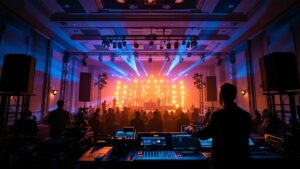
How Much Does Event Technical Support Cost in J…
Get realistic 2025–2026 event AV costs in Japan: technician day rates, equipment rental, streaming p
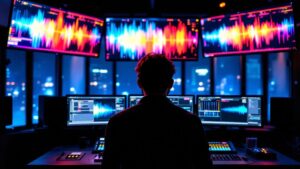
Hybrid Event Production in Japan: How to Delive…
Learn how to produce hybrid events in Japan that work for both in-person and remote audiences. Exper
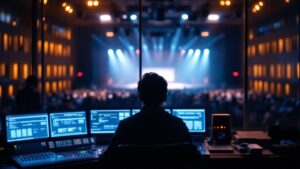
Planning a Bilingual Corporate Event in Japan: …
Case studies and proven playbooks for planning bilingual corporate events in Japan. Learn the 7 tech
Our Projects
Sorry, no posts matched your criteria.
Frequently Asked Questions
How much does event technical support cost in Japan?
AV and technical production typically represents 10 to 25 percent of a corporate event budget, and in Japan it often skews toward the higher end. As a 2025–2026 benchmark, entry-level AV technicians run ¥15,000–¥22,000 per day and specialists ¥60,000–¥90,000, with a 15–25 percent premium for bilingual staff. Mid-venue PA systems rent for ¥40,000–¥90,000 a day, a 4K-pitch indoor LED wall for ¥450,000–¥800,000, and full hybrid production from ¥180,000 for a small meeting up to ¥700,000–¥1,500,000+ for an enterprise conference. A mid-sized hybrid seminar typically lands at ¥500,000–¥1,200,000, and a high-visibility bilingual product launch at ¥1,000,000–¥2,500,000.
When do I actually need a professional technical partner?
The threshold is lower than most planners think. Any event with more than 50 attendees, or any hybrid or streaming component, crosses the line where ad-hoc solutions start to fail — sound coverage turns uneven, displays become hard to read, and unmanaged streams risk buffering or audio-sync issues. With 74.5 percent of planners now running hybrid formats, the majority of corporate events already sit above that complexity floor. Product launches, investor briefings, trade show exhibits, and complex or heritage venues with limited power are where redundancy and experienced operators earn their fee many times over.
Should I build an in-house AV team or outsource?
For most mid-sized companies, the numbers favor outsourcing or a hybrid model. A full-time AV technician costs ¥5.5–6.5 million a year in total compensation before a single piece of equipment, and once you add depreciation, storage, insurance, and training, total cost of ownership reaches two to three times the purchase price — a modest in-house operation can exceed ¥47 million over five years for just three events. Outsourcing converts that fixed overhead into a variable cost of roughly ¥1.5–2.5 million per event. Break-even sits around eight to twelve events a year; below that, outsourcing wins decisively.
Do you provide bilingual technicians, not just interpreters?
Yes — and the distinction matters. Fewer than 25 to 30 percent of working AV technicians in Tokyo operate comfortably in English, and that scarcity is precisely why standard providers fall short on international events. Our crews don’t just translate a speaker’s words; they diagnose a feedback loop, reconfigure a streaming encoder, and run a bilingual sound check while communicating clearly with both your Japanese venue manager and your overseas presenters. That capability removes the communication lag that routinely slows live event problem-solving.
How far in advance should I book?
Engage your technical partner at the 90-day mark. Bookings secured 60+ days out typically qualify for 5–15 percent early-bird pricing, while last-minute requests under seven days trigger 20–40 percent premiums and severely limit equipment and crew availability. A 90-day timeline lets us complete the venue site survey, regulatory and bandwidth checks, system design, and a full rehearsal with remote test participants — the front-loaded work that separates events where nothing goes wrong from events where something does and nobody notices.
Get in Touch